














An unusual preacher
Mass evangelism “campaigns” have become a common phenomenon in contemporary religious culture. However, few people ask how it all started and what are its long-term effects.

The conversion following conversion
This article tells the story of John Newton, the slave trader turned priest, who composed the most famous Christian hymn of all time: Amazing Grace

A street cat named Bob
There are many moments when, in situations that seem to have no solution and everyone has given up believing, especially the one who needs the solution, help comes in a completely unexpected way. For James Bowen, his rescue came in the form of an injured ginger cat.

Born again | The unimaginable personal change
Jesus replied, “Very truly I tell you, no one can see the kingdom of God unless they are born again” (John 3:3).

More than the slaves of appearances
What is left of me after I shut down my computer, turn off my phone, or wipe away my makeup? What about after I quit my job, after I move, after I lose my health, after I get older? What if no one knew me—would I still be someone?

We are not creators, but inspirers and witnesses
It is not we who educate our children, they educate themselves. Unique, complete, amazing. Every child and every childhood is a challenge to discover and respect their individuality. Let's enjoy the revelations they give us and grow ourselves by observing and facilitating their growth.


Together to the end of the road
The journey "through the valley of the shadow of death" has never been easy. However, it has become increasingly lonely as our unfamiliarity with death has made us awkward and reserved when interacting with the dying.

No tomorrow morning: the unexpected consequences of a disturbing law
In front of the camera, the woman smiles calmly. The dimple on her right cheek, among the wrinkles, shows that Annie has repeated this smile many times in her 81 years of life. Today, however, only her lips are smiling. A strange tension weighs on her eyebrows. Today is the day Annie has decided to die.

Can God be removed from history?
“Is God dead?” was the question on the cover of Time magazine on April 8, 1966. Three-and-a-half years later (December 26, 1969), the publication changed that to: “Is God coming back to life?”
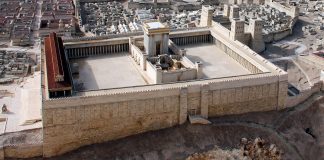
From Jerusalem to Rome
“Jerusalem crucified the Lord, Rome beheaded and crucified his chief apostles and plunged the whole Roman church into a baptism of blood. Rome became, for good and for evil, the Jerusalem of Christendom, and the Vatican hill the Golgotha of the West. The cross was substituted for the sword as the symbol of conquest and power” [1].
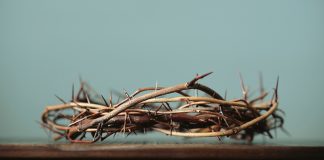
Contemporary with Passion Week
In the frenzy that grips most Christians at this time of year, the coverage of Easter celebrations in the press is a good indication of how people prepare for Easter.

A short guide to the socialisation of children
Even after the World Health Organization replaced the term social distancing with physical distancing, people are still feeling the effects of social distancing.

One habit healthier. What we need to know about change
Let him that would move the world first move himself. – Socrates

Appeal to ignorance: Why it is useless to hide behind your finger
The appeal to ignorance (argumentum ad ignorantiam) is an error in thinking which argues that a conclusion is true because there is no evidence against it, or that a conclusion is false because there is no evidence in its favour.