









Hungry for youth and immortality
Crouched in the trenches of the horror of old age, modern individuals no longer wish to recover anything from the natural ageing process that their ancestors practised with such serenity. On the contrary, the first signs of physical decline become the raw material for a wide range of efforts (from picturesque to sickly) to forge a youth that the mirror refuses to restore.
Answers hidden in plain sight
I grew up on the border between two different universes, not geographically but spiritually. There, across that fine line, lived more than half of my extended family, with a different worldview.

Generation Z’s faith: between revival and decline
The faith of Generation Z is a recent phenomenon. In the United States, at least, young people attend church more frequently than older generations. This change signals huge opportunities for the Church. However, the picture is far from complete.
Never enough: an imperfect article on perfectionism
The end of the line for Christian perfectionism is not perfection, but atheism. This is because what we imagine to be the constant unsatisfied look of God upon us, is a burden too heavy for any human to bear.

Escaping from the deadly family
Letting go of the environment and education you received at home is difficult as it is, but can there be liberation if you grew up in a family of mobsters?
Church culture: the effect of the way we work together
It is not something that is written in any rules or printed on posters. However, you can see it in the way people greet each other and share their ideas, as well as in the sense of belonging they experience when they participate in church activities. The organisational culture of the church can be a source of unity, or conversely an invisible obstacle...
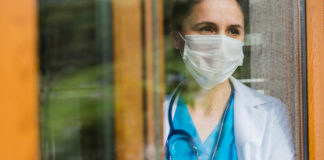
Eight months into the pandemic, where are we headed?
We do not know what 2020 would have looked like without a pandemic, but we already know that some losses could have been prevented. And, if the future lies in the spectrum of pandemics, as the WHO warns, we should learn all the lessons that can be learned from this long journey.

Holidays when you’re not feeling good
The December days that start with the number 2—that is, starting from the 20th—are like a train with batteries on a closed circuit. They pass, with the twinkle of LEDs, like carriages loaded with emotions about the past, about the future and about the present, with nostalgia and regret, with delight, and with fear and worry: a mixture that we enjoy with the...
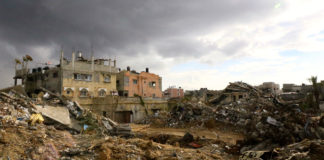
The doctor who healed hatred
When war kills not one but three of your children, what is there left besides hatred?

How to manage “good debt” and “bad debt”
Almost half of Romanians are in debt, while 39% say that they don’t pay their debt on time, and 29% never create a budget. These figures, based on the most recent national studies, reflect Romanians’ values and financial literacy, but they can also represent the starting point of a conversation about "good debt" and "bad debt."
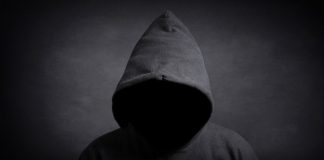
Beyond the mask of anger
Thousands of cries for help are hidden every day behind extreme violence or riots. Few of them overcome the wall of our indifference and prejudice, and even fewer of those in need get a second chance. Stories like that of Sephton Henry show what it means to offer help even when change for the better seems impossible.

Working from home: how do we find a work-life balance?
When it comes to working remotely, many benefits come to mind. In practice, however, working from home can be so all-consuming that we don't know where work ends and personal life begins, and we need strategies to balance the relationship between the two.
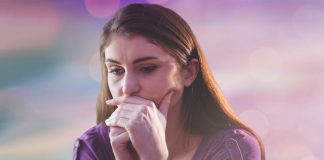
How can I discover God’s will for my life?
Whoever enters into a friendly dialogue with the will of God will never be the same person as before this dialogue. However, whatever one believes about God's will depends on their view of God's character and, therefore, on God's purpose for them.

How much are we worth as humans?
Every day is an opportunity to ask ourselves how it is that human life has such little value in the eyes of some of our contemporaries—those contemporaries living in freedom and democracy (on paper, at least), who are educated and socialised within the same civilization as we are, often even in the same community, or under similar civil laws and generally having the...
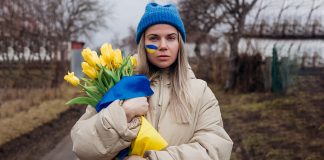
Tears, war, and tulips: a day among the Ukrainian refugees at the Siret Customs Point
The wind is blowing and it is snowing at the Siret Customs Point. Refugee groups stream by, women with children clinging to them, and the words of a little girl from another war, concluded almost eight decades ago, keep running through my mind: “And this was imprinted in my mind, that when my father is not home, it is war.”