










How to manage parent-child conflicts during the pandemic
One can hardly overestimate the role the relationship between a parent and their child plays in forming a matrix for the child’s future relationships, whether healthy or dysfunctional. The quality of the parent-child relationship is essential because it directly impacts the child’s social and emotional development, and its quality influences the child's ability to deal with future conflict.

COVID-19: Helping children (and others) with viral anxiety
Even in difficult times there are many things we can do at home to help children as well as teenagers to feel less worried.

Evidence-based medicine: How to set a foundation for trusting the doctors
How can I be sure that the recommendations I receive after a medical consultation are correct? In the article below, we discuss evidence-based medicine.

COVID-19: Crisis prayer and the crisis of our prayers
I was descending from Omu Peak, in the Bucegi Mountains, with a few dozen young people. It had not been an ideal hike, and we were behind schedule. The forest made the darkness even thicker as it began to cover the mountain, and slowly, our minds as well.

COVID-19: What if we received bad news in a void?
What if there was no good news to give us confidence that we could get through the troubles facing us now? What if there was no good news to assure us that we are cherished, loved and supported, that we are not alone?
COVID-19: Hope ordinances and a divine governance
Fines, military ordinances, police and army patrolling the streets – this is the reality we have suddenly found ourselves living in. It is a tightening reality, a rigid corset-like structure of rules.

COVID-19 after vaccination: How much does vaccination protect us?
Why can vaccinated people still get COVID-19 or even die from the disease?
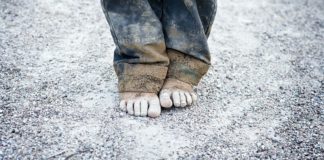
”The coronavirus has been anything but a great equalizer.” The impact of COVID-19 on the world’s poor
A famine of biblical scale is already looming on the horizon, says David Beasley, director of the World Food Program. More than 30 developing countries could be affected by the scourge – 1 million people are already affected. It's not just people going to bed hungry, Beasley insists, explaining that it's a state of emergency where outside help is the only hope.

COVID-19: Inequality and the pandemic
When confronted with the pandemic, we are anything but equals.
Shutters down all over Europe: life in the time of the new coronavirus
These days we all need to hear good news—that life will soon return to normal and that we will be able to return to the troubles of yesterday, which now seem small to us. In the meantime, our lifestyle has seen changes that we could not have imagined just a few weeks ago.

How you can get your sense of smell back after a cold
A recent study showed how we can fully restore our olfactory sense after a cold, during which nasal constriction prevents us from smelling even the most intense smells.

COVID-19: Social distancing and the new ways to love amidst the pandemic
The epidemiologist Marc Lipsitch thinks that social distancing will have to continue, in one way or another, hopefully in milder forms and in correlation with other activities. Lipsitch is the author of a study suggesting that social distancing may be necessary, possibly intermittently, until 2022.

COVID-19: A certain God in an uncertain world
“If anything kills over 10 million people in the next few decades, it’s most likely to be a highly infectious virus rather than a war — not missiles but microbes. We are not ready for the next epidemic” – these were the words Bill Gates said at the beginning of his speech at TED Talk conference on April 3, 2015.
COVID-19: Rehearsal for the big surprise
There has been a lot of speculation in the online environment about COVID-19 and the end of the world, but the connection between the two is more subtle than it first appears. It has been suggested that the pandemic is only the tip of the iceberg, that it is one of the seven last plagues of Revelation, or that it is the fourth...

God’s providence in times of crisis
Regardless of the form they take, crises give rise to legitimate questions about God's providence: Where is God when we suffer? Has He forgotten us? Is He punishing us? Does He still have things under control?