












Jim Ayer | Forever a fisherman
Jim Ayer was, for most of his life, a slave to his own dreams—a fisherman of thrills and addictions. From when he was a child, he attached a ball and chain to each ankle, closed himself up in his own world, and threw away the key.

Post-atheism and the relativisation of relativism
The end of the last century created the perfect context for postmodernism to exercise its veto over all the ethical dilemmas of the day. As a result, today, as in vitro fertilisation, abortion, euthanasia or homosexual marriage enter the legislative agendas of more and more countries, we see political correctness taking precedence over religious morality.

1,000 years later
Christianity is fundamentally built on the belief that the life and mission of Jesus Christ on earth were a continuation and fulfilment of God’s earlier revelation, known as the Old Testament.

How to study the Bible properly
Do your best to present yourself to God as one approved, […] who correctly handles the word of truth. (2 Timothy 2:15)

Really Living
The following interview was conducted by Hope Channel Romania almost ten years ago when the guest, Pastor Don Schneider, was the president of the Adventist Church in North America. Last year, on May 23, he passed away at the age of 76. Those who follow Hope Channel remember that, for a few seasons, they were able to watch his show, Really Living. Every...

COVID-19: A world beyond all human tragedies
Should we be optimistic or pessimistic about our future? This is a question even specialists are concerned with, and it cannot be answered easily. It is difficult to predict what the future holds.

We are more than we can easily explain
Suppose I leave the window open then leave home. A stack of banknotes can be seen on the table through the open window. An individual walking down the street notices the opportunity, thinks for a while, but decides to move on. Why would a man who has the opportunity to steal decide not to?

What do we do with the lingering sense of guilt?
I baptize you with water for repentance. But after me comes one who is more powerful than I, whose sandals I am not worthy to carry. He will baptize you with the Holy Spirit and fire. – Matthew 3:11

Why do bad things happen to good people?
The question in the title is a protest which expresses a fair amount of suspicion towards God. It is a barely concealed condemnation of God and His actions, the strange rebellion of a world that sees itself as morally superior to God. People forget Scripture's words in the book of Job: Beware lest wrath entice you into scoffing (Job 36:18, RSV).

He believes and what he believes comes into being
Very few people have ever found rest in what they are and what they do. They are always seeking what they do not have and trying to become what they are not. These people talk about transformation, development and fulfilment but no matter their accomplishments or status, they are always thinking that they need to surpass their present state, that there is something...

Knowledge sharing in Christian communities
Whether we are cooking, repairing things, or solving life's problems, we are always learning from each other. However, when it comes to certain areas, including church life, the interchange of experiences is lacking. Communities often keep their ideas, and especially their mistakes, to themselves. Can we rediscover the deeply biblical nature of knowledge sharing?
The darker side of our world
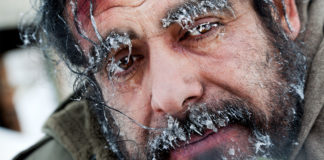
The world of the homeless is the darker side of our world. It is inhabited by vagrants, drug addicts, and the powerless. This world has its own rules, customs, pleasures, and pains, but lacks meaning and peace. And those who enter this world struggle to leave it.

The God of all | The divine vision on our differences
The first part of my life was marked by multiple barriers that placed me in a minority status.

Saved in the surf
Growing up on the sunny east coast of Australia meant summers at the beach. I was no surfer dude but the crash of waves and unmistakable squeak of hot sand was often a soundtrack in my adolescence. It’s easy to romanticise the white sand beaches and crystal blue hues of Australia’s coastal waters but now, particularly as a parent, I am aware of the danger...

Prodigal sons and abiding sons | How to help children stay close to God
“Children cannot live according to God’s ways if they do not know God’s Words.” This is a truth in which Christian parents can ground their efforts to help their children build their faith in God, in order to later avoid the path of prodigal sons.