












The limits of education and education with limits
In the book, "Sisyphus: Or the Limits of Education," first published in German in 1925 by Siegfried Bemfeld, it is stated that education is limited by the personalities of the adults who take care of the children or students, the personalities of the educated, and the social environment in which the educational act takes place.

Saying “I do”
Nine years ago, as my then-fiancé and I were deep in the throes of folding paper flowers, painting glass bottles, and designing and making our own wedding stationery, the question popped up fairly regularly: Why don’t we just elope?

I am what you have taught me to be
The perspectives we acquire as children about ourselves as individuals, about the world, and even about God, become beliefs that filter and guide the choices we make as adults. Some of these beliefs are helpful. Others are not. In fact, many of the obstacles we encounter in adult life are caused by these filters.
Difficult conversations | How do we talk about death with our children?
Talking to your children about death can be an act of love. You can't take away their pain with a simple conversation, but you can give them something just as important: truth wrapped in gentleness, the reassurance and relief that they are not alone in their grief, and even the hope that sees beyond the loss.

Can parents help motivate their children?
One of the biggest challenges facing both parents and teachers is to help children stay motivated so that they can keep focus, persevere when they are struggling, move forward, and finish what they have begun.
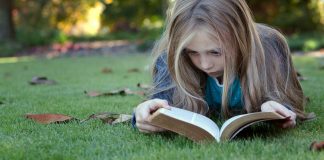
How to inspire a passion for reading in your children
"School is where children learn that they have to read. Home is where kids learn to read because they want to," conclude the authors of a guide to cultivating a passion for reading in children of all ages. It is clear that with good resources and role models, a child can become passionate about reading, but there are parents who wonder where they...

Parents, children, and online exposure
A photograph of a father holding his sick little boy is simply an example of parental affection, right? But it can provoke a virulent reaction when it's posted on Facebook and the protagonists are naked under the refreshing spray of water in the shower.

Do you know your child’s love language?
In 1997, Dr Gary Chapman released the book "The 5 Love Languages of Children" as a follow-up to his bestseller, "The Five Love Languages."

Four red flags to watch in your teen’s relationship
Young love can be intoxicating, exhilarating and filled with passion. While many young relationships are healthy and positive, some can take a concerning turn.

Children and divorce: Mistakes we should avoid
In any family, the child's wellbeing depends entirely on the harmony between their parents. When love is "gone" and Mom and Dad reach the conclusion that they can no longer work as a couple, the children are the first to suffer.

The great failure of too high expectations
From the first positive pregnancy test, parents often build up expectations for their baby. And as the little one grows, so do the expectations—emotional, cognitive, moral and academic. While it's only natural that this should be the case, as children need to be set standards, parents' expectations can often turn out to be a double-edged sword.

Blood is (not always) thicker than water | Sibling estrangement, from causes to solutions
For at least one party, sibling estrangement can be more painful than loss through death, writes Fern Schumer Chapman, who was excluded from her brother's life for four decades.

When love errs…
Henry Ford is believed to have said: “Sometimes a mistake can be all it takes to make a valuable achievement.” Apparently paradoxical, the statement says a lot about us and what we consider at any given moment to be “a mistake.”

Every family has a story | Why you should know yours
“We all feel stronger if we are part of a tapestry. One thread alone is weak, but, woven into something larger, surrounded by other threads, it is more difficult to unravel,” says family therapist Stefan Walters, summarising the benefits of understanding the history of the family we come from.

The house that has rebuilt a home
Some houses allow you to read the owners' story on their walls and through their windows. Although it happens less and less often, the most beautiful houses are built by those who mean to live in them. Cara Brookins and her children know very well how every beam or window in their house was put up, because they built it together.