










COVID-19: How to stay positive and balanced
Our reality isn’t always a calm place. Feelings of safety and peace that are so necessary for our well-being often elude us. What is happening today on a global level only goes to show how fragile our world is, and how easily we can lose control over the things we thought we had mastered.

A street cat named Bob
There are many moments when, in situations that seem to have no solution and everyone has given up believing, especially the one who needs the solution, help comes in a completely unexpected way. For James Bowen, his rescue came in the form of an injured ginger cat.

“One Thousand Gifts: A dare to live fully right where you are”
"One Thousand Gifts" describes the beautiful revolt of a soul that does not want to be crippled by what it has lost, but to pierce its own suffering like an arrow springing from the bow of grace, a leitmotif of the whole book.

Cut from a different cloth
When I look at the lives of some people, I can't help but wonder if they are cut from a different cloth to most of us. Their courage in the face of challenges, their resilience, their vision and their achievements are so impressive that my imagination wonders what the world would look like if their passion were multiplied.

The meaning of life in moments of uncertainty
We are leaving. Even if we were not supposed to, we chose to and it is happening. We are moving again. It is the eighth time in eleven years of marriage.

The slumber of the proud
One of the best-known stories told by ambitious entrepreneurs today is that if you work hard, you will have a lot.
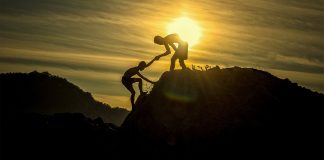
Stories with happy endings | How to keep going despite the obstacles
For some people, suffering is temporary. For others, life itself can be a long series of painful blows. However, experience shows that recovery is possible even when people seem to be at the end of their tether.

Why it’s okay to let your children get bored from time to time
The refrain: “I’m booored…” is “the worst song on the parenting soundtrack,” says journalist Kat Patrick humorously. Chanted in the most inconvenient moments, this complaint often triggers the parent’s guilt or concern. But there’s nothing wrong with letting your child get bored sometimes.

Any mountain can be climbed
There is nothing we can do. Thousands of dreams ended with this short sentence. In the face of too great an obstacle or tragedy, giving up seems the only option left. But there are some people who love what they do so much that nothing stops them from adding an unless. This word breeds the courage and creativity in finding solutions, and then...
Codependency: a concept too widely used to have a single definition
A word is dead when it is said, some say. I say it just begins to live that day. – Emily Dickinson

Are you a workaholic?
By 2030, epidemics will be eradicated; life, rejuvenated by injections, giving lifespans of 150 years; and cars almost obsolete with aeroplane ownership common. These were the 1930 predictions of FE Smith, a British politician and friend of Winston Churchill.
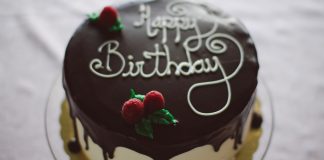
A birthday gift out of the blue
Until that point in our marriage, my wife and I had shared a car. She worked in the city, close to public transport and wherever we went, we went together. And she preferred me to drive. When we had our daughter, the situation didn’t change much. Covid-19 made it hard to go anywhere and we found our four-door sedan big enough to tackle...

Last wish: An open discussion about voluntary euthanasia
When we want to position ourselves for or against voluntary euthanasia, we must first be aware that, in addition to the subjective dimension of the issue, there are also important objective aspects to consider.

A brief history of van life
#vanlife . . . it’s the aesthetic trend we’ve seen sprawled across the internet in the past decade. The reservoir of photographs framed by flung-open doors or windows onto a glorious, unpeopled view has stirred many an individual’s curiosity.
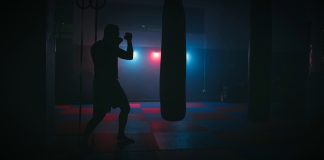
The Dunghutti Destroyer and the fight of his life
Renold Vatubua Quinlan is a “proud Dunghutti man” with Fijian heritage. He grew up on the mid-north coast of New South Wales around Port Macquarie and Kempsey. Known as the Dunghutti Destroyer, Quinlan is a professional boxer who held the IBO super-middle weight title from 2016 to 2017. “My biggest experience in my life was winning the world title,” he said.