











The price is right: “For who makes you different from anyone else?” (part 2)
Can the thinking of a single philosopher be so influential as to change the fundamental values of a society and lead to tremors of transcontinental proportions, like the economic crisis that began in 2007? Could Ayn Rand's philosophy be the almost-imperceptible reason for transforming the United States, as Levine puts it, into a "selfish nation"?

Saving discipline: God’s rod?
The saying Spare the rod and spoil the child is deeply rooted in some cultures as saving discipline. Where does this idea come from and is it true that using the rod is next to godliness?

How to manage “good debt” and “bad debt”
Almost half of Romanians are in debt, while 39% say that they don’t pay their debt on time, and 29% never create a budget. These figures, based on the most recent national studies, reflect Romanians’ values and financial literacy, but they can also represent the starting point of a conversation about "good debt" and "bad debt."

Online fighting, a new subject of scientific study
An argument with people who seem deaf to opposing views, instigating conflict, tribe against tribe, is probably a common experience for social media users. Some believe that it is so common that it should be the subject of a new field of research‒erisology, named after Eris, the goddess of discord in Greek mythology.

Saying “I do”
Nine years ago, as my then-fiancé and I were deep in the throes of folding paper flowers, painting glass bottles, and designing and making our own wedding stationery, the question popped up fairly regularly: Why don’t we just elope?

Thinking errors: What do we do with destructive thought patterns?
What we think about ourselves, over time, becomes our reality. This is a good enough reason to identify thinking errors left running in the background and to seek out strategies for healthier thinking.

Escaping Neverland: Finding purpose, whether young or old
Making any choice denies the possibility of at least one other choice. When confronted with this truth, young people often find themselves unprepared for life’s big choices.

The marks of (un)belief
I believe that doubt is a part of faith, not its opposite. It took me quite a few years to say this without feeling guilty. I needed to have many experiences before I could accept that questions are legitimate and not a sign of spiritual decay.
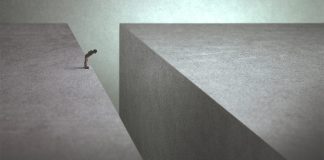
The leap into the unknown. Is there a cure for the fear of change?
Since the beginning, human life on Earth has been an assiduous battle with the unknown and a series of unprecedented risk-taking. Exposure to danger seems to be the price to pay for progress. This is the first lesson learned in childhood, when the need to move from dependence to independence pushes us beyond the limits of safety and personal comfort. It familiarises us...

COVID-19 and our low-risk but endangered children
All COVID-19 statistics lead to the same conclusion: the young ones, our children, are at the lowest risk of getting ill or dying from the virus. That’s comforting. But the pandemic does pose a certain danger to them.

Sugar and venom: pitfalls of the freedom to buy and sell sex
More than 19 years ago, the Netherlands experimented with legalising prostitution, an approach that many countries looked at with interest and curiosity. After all, after the failure of the "noble experiment" of American prohibition, people wanted to see the result of the opposite approach with regards to sex.

How can family conflict bring relatives closer?
Family conflict? The fact that not only milk and honey flow within our families, and conflicts crop up more often than we would like, is not new to anyone. Experience teaches us that people who share a roof as well as a last name clash in their opinions or behaviours in direct proportion to the number of hours they spend together.

The summer to end all summers
Growing up, a fixture of my childhood was the iconic Aussie summer. I spent many of my early years either indoors with the air conditioning turned up full-blast, or swimming in our local watering hole. The scorching sun was a constant, with days of humid weather on the east coast or dry, oven-like temperatures in the west.

”Think of the children!” Are video games harming us?
As the world went into various lockdowns over the course of last year, people turned to a variety of entertainment forms to cope with...

More than just one thing
If you were asked to describe who you are, what would you highlight first?