














Gifts that (don’t) impoverish us
During the holidays (but not only then), our budgets often go off the rails as we exhaust ourselves searching for gifts that will at least make a good impression, if not unlock the deep joy of the recipient’s heart. In this frenzy, however, we must not forget that we are teaching our children, consciously or unconsciously, valuable lessons about the meaning of giving.

Back from the brink: A doctor’s struggle with depression
Here’s a disturbing fact: Medical doctors have the highest suicide rate of any profession. It may be uncomfortable to read that in the USA nearly 400 doctors take their life every year. So how does a physician find assistance in a system that seems to be clearly failing its own? I sat down recently with Dr Charles, a fitness enthusiast, soccer fanatic and dad, to...

When making friends is not easy | Friendship and shyness
Next to family and health, friends are among the top reasons that make us happy. But what if we are solitary, recluse or shy?
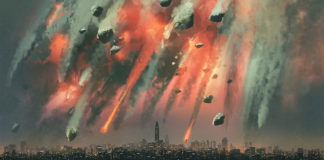
Pocket apocalypse: The end of the world in the press
The image of an apocalypse generated by a microscopic coronavirus has been sketched more than once by the press in the past few weeks.

COVID-19: How to stay positive and balanced
Our reality isn’t always a calm place. Feelings of safety and peace that are so necessary for our well-being often elude us. What is happening today on a global level only goes to show how fragile our world is, and how easily we can lose control over the things we thought we had mastered.

The light of closed eyes
Under the burden of evil, often made public obsessively, insinuatingly, too often we perceive the world as an endless cycle of negative emotions and predictions. We lose the broad perspective that encompasses the initiatives beautifully woven by people whose hearts beat for God and for their fellow men, people who make this world liveable.

What does the blue sock know about oppositional behaviour?
It all starts with the blue sock—that dreadful sock that the five-year-old firmly and loudly refuses to put on. "But what's wrong with it? Is it too tight?" "No! I don't like it!" "But you can't go without socks, just put this one on." "I DON'T WANT TO!" These infamous words bring the scene to a close in tears. Only the child allows...

ABBA 40 years on: A return with conflicting feelings
After 40 years, ABBA has made a return to the music scene with an album primed to awaken or indulge the nostalgia of generations who lamented the breakup of the Swedish group in 1982. The album comes with a virtual concert in which the group performs all their new songs, with a twist: with the help of digital technology, the singers will appear...

The God of love, the God of justice
Centuries ago, the German theologian and philosopher Gottfried Wilhelm Leibniz used the term “theodicy”1 for the first time—“God’s justification”. By theodicy, Leibniz meant the ultimate reality of justification, once and for all, of God and all of His ways before the whole universe.
Overcoming boundaries without crossing the line
I was a young student looking for a good paying job to support my family and my studies. On that day, I found myself in the head nurse’s office at the nearby nursing home for the elderly.
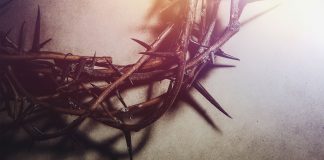
The greatest love
The word sacrifice is not really a pleasant word. When you hear it, you may think of weird archaic rituals involving blood and animals. You may think of giving up something you love or like to save money or to save your waistline. Sacrifice is not a word we use often, and it’s often used with negative associations. But in a strange twist, the action...

Strong prayers to the hidden God
No one has ever seen God, but the One who knew Him before He was born on this earth taught us all to address Him in prayer.

Emotional literacy
"What is the point of anger and where do you feel it in your body?" I was in my early 20s and looked at anger with wide eyes and few answers about emotions. I knew too little about the sensations it caused in my body, or how to identify and use them.
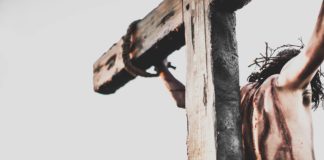
The opposite of love is not hatred (part 2)
Why couldn’t God simply have forgiven sinners? Precisely because sinners cannot be forgiven until they completely understand sin, with all its far reaching consequences, or before the wages of sin are paid.