














Children’s finances
Mel Rees, a contemporary Christian author, observed that “money [...] is life [...] in a tangible form.” He reasoned that life is “an expenditure of time and talent,” while money is “the result of the use of time and talent.”

Psychotronic attacks, the news aggregator, and the absurdity factory
A recent article on the website of a Romanian news aggregator claims that prayer protects against psychotronic attacks because it "raises the brain's operating frequencies". The article is a prime example of an editorial genre that proliferates precisely because of the absurdity of its claims, not in spite of them.


The myth of more
In the late 1980s, Donald Trump was asked how much money it would take to make him happy. His answer? “Ten per cent more.”

A success that hurts
Lawyer Kent Hansen is under no obligation to write about God. It is not part of his job as Head of the Legal Department at Loma Linda University in California. No, he speaks and writes because he was found by God, because he is passionate about Jesus Christ and because he is convinced that anyone can live their faith as a vibrant, authentic...

Fuel for health
Despite often being labelled as the main culprits for weight gain, carbohydrates are actually vital macronutrients, alongside proteins and fats. They provide the body with energy.

My journey to Bethlehem
They say that "all roads lead to Rome". This famous saying originated in ancient times with the extensive network of roads built by the Romans to facilitate communication and travel throughout their empire.

The Good Place: great questions, medium answers
In the opening scene of The Good Place, celestial being Michael (Ted Danson) explains that most world religions and philosophies get their respective understandings of the afterlife only about five per cent right.

Understanding the basics of nutrition
The importance of proper nutrition is often underestimated. The nutrients in food provide energy, contribute to tissue growth and repair, and regulate physiological processes. Nutritional needs vary depending on age and physical condition.
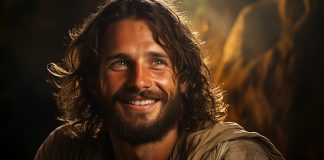
Joy is the face of Jesus
I still remember the shock I felt when I first watched "The Gospel According to Matthew," starring Bruce Marchiano. It was not the first film about the life of Jesus that I had seen, but it was entirely different from anything I had known before.

Preconceptions that cause unnecessary anxiety for parents
Today's mothers are faced with difficult decisions: breastfeeding or formula feeding, having a career or being a stay-at-home parent, modern or traditional education—and silent pressure from the fear that any choice they make is a mistake. This constant doubt weighs more heavily on them than the choices themselves.

Violence: an exploration of its origins, perpetuation, and eradication
In the US, the shocking news of Charles Manson's death marked the end of a disturbing chapter in history.

The mad monk and the case for good theology
The Oxford Online Dictionary describes theology as “the study of the nature of God and religious belief”. That’s a helpful understanding, but let’s begin with some seriously bad theology as practised by the Russian mystic and faith healer Grigori Yefimovich Rasputin.
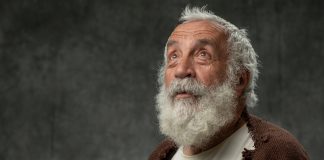
Zechariah: From disbelief to praise
When prayers go unanswered, faith can turn to disbelief and hope to scepticism. On the other hand, God can intervene at unexpected moments, providing unexpected answers, as happened in Zechariah's life.

Salvation from the end of the spear
Their common dream was to take the Gospel to the far reaches of the earth. In the early 1950s, young men Jim Elliot, Pete Fleming, Ed McCully, Nate Saint, and Roger Youderian were with their families in South America, working in Christian missions. The future was to bring them together in an extremely dangerous dream.