





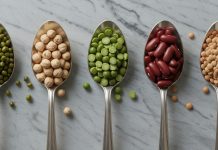








Have it your way
“You can have any colour you want, as long as it’s black,” Henry Ford famously said, and the modern mass production revolution began. Today, however, you can customise almost anything. You can blend your foundation to match your exact skin colour. You can design your own shoes; you can personalise your car, your suit and even your M&Ms.

Life as a river (an imaginary but possible interview)
This imaginary interview is intended to convey that life and its meaning is subject to a never-ending process of change and that we as humans have a sacred duty to decipher this dynamic puzzle, and to play our roles with all the joy and seriousness we can muster.
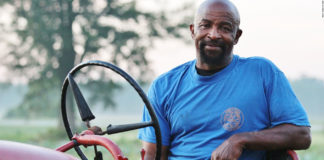
Food for life
A lot is said and written about food, and a fair share of the promises we make are related to it. We might decide to eat more healthfully or perhaps we wish to diminish food waste. Unfortunately, our promises are often quickly forgotten, because destructive habits are hard to forsake. There are, however, people who have found ways to transform not just their...

The seasons of (un)belief in Christopher Hitchens
Christopher Hitchens was not merely an atheist but, as he described himself, a militant antitheist. It was in his home, at his invitation, that the group known as “The Four Horsemen of New Atheism” first convened. Born in 1949 in postwar England, Hitchens was shaped by the politics and intellectual currents of the 1960s.

Symptoms of a failing marriage
The prelude to a divorce often comprises highly destructive behaviours, which can prevent a couple from keeping their enthusiastic promise of staying together "for better or for worse until death do us part," says American psychologist Dr John Gottman.
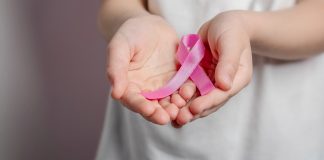
Understanding breast cancer
Breast cancer claims the lives of more women than most other forms of cancer. In the United States, the incidence of this disease in women is about one in eight, which is nearly 13 per cent, while in Australia and New Zealand it’s slightly lower at one in nine (11 per cent).

Lessons from the radiotherapy room
Lying on my back, naked except for a sheet draped over my lower body, arms tucked behind my head, I’m feeling vulnerable and exposed. The radiotherapist leaves the room. I’m all alone. I begin to panic as I anticipate the beams of radiation about to penetrate my skin.

“The Clifford Goldstein story” | Book review
"The Clifford Goldstein story" is addressed to those who, ever so often, feel the need to read something about experimentation, because it is not about theorising a rebellious young man's search for the path of life, but rather a true-life story.
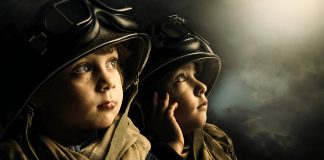
How to talk about war with your child
Our children are forced to adapt to a world we did not want for them. As many mothers who attend coaching sessions say, the theme of war is one of the most difficult for them to address in discussions with their children, as they feel responsible for finding the balance between the child’s emotional security and their exposure to the reality around them.
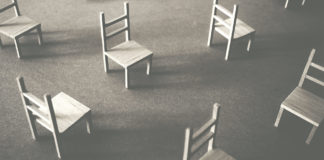
The biased sample: why science should not be practised on friends
The biased sample is a kind of unrepresentative sample, either for quantitative reasons (as is the case with the too-small sample), or for qualitative ones, when its structure does not represent the structure of the real population that is the object of the research.

Is faith a negative thing in life?
The effect or influence that a particular thing has on us depends largely on where that thing falls on the scale of our values. It's one thing to lose your folding fan in a foreign country and quite another to lose your passport.
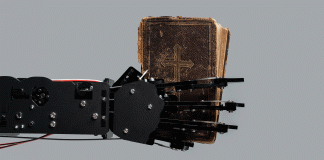
What the Christian mission gains and loses in the age of AI
Christianity has never missed an opportunity to engage with major communication technologies. In fact, it has always found ways to transform them into vehicles for its mission. However, this adaptation has always come at a price. Today, in the midst of the artificial intelligence revolution, what will the Christian mission gain and lose?

COVID-19: Let’s not go back to normal
Let’s not go back to the abnormality of before! This is one of the messages which the French hung from their balconies on May 1, when the activities that would usually happen on this national public holiday could not take place. What can we change and what is worth changing after COVID-19?
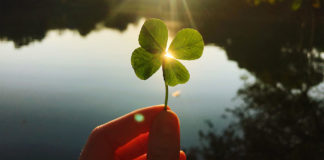
Positive thinking overdose: Why too much optimism is harmful
If optimism helps us get rid of problems more easily, too much optimism does the exact opposite: it amplifies them. Pushed to the extreme, positive thinking prescribed as an antidote to suffering prevents us from accepting reality as it is and starting to look for solutions that can make our lives easier.

End It Now: why violence against women is everyone’s problem
I feel like every time I’ve tuned into the news lately, I’ve heard a story about a woman dying from intimate partner or domestic violence (DV). It is heartbreaking and sickening.