














“The Case for Jesus: The Biblical and Historical Evidence for Christ” | Book review
"The Case for Jesus: The Biblical and Historical Evidence for Christ" challenges both the atheist and the agnostic, as well as the convinced or full-of-questions Christian, to look at the person of Jesus of Nazareth in a new light.

“God, Gödel, and Grace” by Clifford Goldstein | You have reasons to believe
There have always been people who relish a debate—though all too often, even when the subject hardly matters, the whole exercise amounts to little more than intellectual gymnastics in a thimble and scholarly squabbles over how many angels can dance on the head of a pin.

Democratising knowledge: the role of digital learning and the need for offline educators
Let’s begin by extrapolating Paul’s assertion: “...but test them all; hold on to what is good” (1 Thessalonians 5:21).
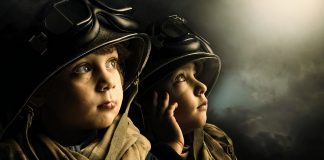
How to talk about war with your child
Our children are forced to adapt to a world we did not want for them. As many mothers who attend coaching sessions say, the theme of war is one of the most difficult for them to address in discussions with their children, as they feel responsible for finding the balance between the child’s emotional security and their exposure to the reality around them.

The wellness expert amateurs who sickened us
In Europe, few people know Gwyneth Paltrow as anything other than an American actress. In the United States, however, her "modern lifestyle" wellness brand called goop is growing her reputation—in a negative way.

“Can science explain everything?” | Book review
John C. Lennox, Professor Emeritus of Mathematics at Oxford University, is an internationally renowned author and speaker, addressing topics at the intersection of science, religion, and philosophy. Beyond contributions in the field of science, Lennox participated in debates with representatives of New Atheism (R. Dawkins, C. Hitchens, and P. Singer) and wrote several books, including God’s Undertaker, Seven Days That Divide the World,...

Stories for adults and hidden messages in children’s fairy tales
Children's books and cartoons contain more than just life lessons and morals such as "good always triumphs over evil". Some have political, social, and historical connotations, while others contain subliminal messages with sexual, discriminatory, or even malicious undertones.

The father of modern education
“In the works of Comenius one feels that a prophet is speaking; he was indeed a colossal figure, but only in recent years have his ideas received the respect they merit”.
Interpreting Scripture: Bible Questions and Answers | Book Review
Interpreting Scripture is a book published by the Biblical Research Institute in the USA. It is aimed at people who want to understand the Bible better.

Help your child grow smarter
Every loving parent wants their child to become sharper, more intelligent, and to develop the essential skills needed to succeed in life. Science offers several key “tools” parents can use to help their child boost IQ and unlock potential, making them powerful advocates for their child’s future success.

Emotional literacy
"What is the point of anger and where do you feel it in your body?" I was in my early 20s and looked at anger with wide eyes and few answers about emotions. I knew too little about the sensations it caused in my body, or how to identify and use them.

The bilingual child’s advantages
The child’s linguistic appetite must be stimulated from an early age, experts say, highlighting that the benefits the bilingual child reaps extend beyond the linguistic sphere.

The essentials of Christian thought: Seeing Reality through the biblical story | Book review
Written by renowned church historian and Baylor University theology professor Roger E. Olson, The Essentials of Christian Thought [1] explores the metaphysics embedded in the biblical narrative.

“Divine Providence: God’s Love and Human Freedom” | Book review
Bruce Reichenbach's book, Divine Providence: God’s Love and Human Freedom is impressive first of all due to the author’s total disinterest in impressing his readers. Instead, he has a legacy to pass on.

How to make sure we have a rational faith
Fundamentalist movements, extremist and sectarian religious beliefs, manipulations of the mass of believers, conspiracy theories within religious sects, and other such threats, emphasise the need for critical thinking.