











Movies and the fascination with good
Starting with biblical stories, moving on to myths and legends, and finally reaching the contemporary film industry, people have always been fascinated by heroes. But what makes us look for heroes? What do modern heroes look like and what do they mean to the contemporary world?

12,000 people for one child
Until 2013, we only knew about the existence of Batman, the famous comic book hero, but almost a decade ago the whole world also got to know Batkid, a real boy from San Francisco, USA, whose story confirms the saying that “truth is stranger than fiction.”

“Demon Dialogues” and the need for connection: Why do conflicts between partners arise?
Happy couples are not spared from marital conflict, but the crucial thing is that they have simple but effective tools to strengthen their relationship in a way that does not allow the conflict to destroy the emotional connection between them.

Some still believe in education
Is it worth fighting for a better world? Is it worth believing that, in a world relentlessly subject to the laws of entropy, hope, good thinking, beauty will still have the chance to develop and enrich our life horizon through education? Can tomorrow's world be better than today's, when everything we hear seems to be so catastrophic, and everything we do seems to...

Why be moral?
“No doubt equality of goods is just; but, being unable to cause might to obey justice, men have made it just to obey might. Unable to strengthen justice, they have justified might; so that the just and the strong should unite, and there should be peace, which is the sovereign good....” (Blaise Pascal, Thoughts)

Becoming a father in the second half of life
While the debate over the “ideal age” for fatherhood may go on endlessly, one fact is clear: the average age at which men in modern society become fathers has steadily increased in recent decades. Behind the polished statistics lie moving personal stories about what it means to embrace fatherhood at an age when youth is little more than a distant memory.

Leaving home without leaving your parents
The sun was shining on that wonderful July Sunday when you were enjoying your summer vacation. Your parents were with you on your walks in the park and watched you ride your bike without the slightest care in the world. Their smile gave you hints of the purest parental love.

The price is right: “For who makes you different from anyone else?” (part 2)
Can the thinking of a single philosopher be so influential as to change the fundamental values of a society and lead to tremors of transcontinental proportions, like the economic crisis that began in 2007? Could Ayn Rand's philosophy be the almost-imperceptible reason for transforming the United States, as Levine puts it, into a "selfish nation"?

Too tired to love?
Too tired to even touch hands, my husband, Bernie, and I crawled into bed. It was the end of a day in which we’d hardly spoken to each other, except to ask where things were or say where we were going—or had been. Our house had been full of guests for several weeks. To make matters worse, we’d just moved in and there...

The marks of (un)belief
I believe that doubt is a part of faith, not its opposite. It took me quite a few years to say this without feeling guilty. I needed to have many experiences before I could accept that questions are legitimate and not a sign of spiritual decay.
I’m the only one who can solve my problems: True or false?
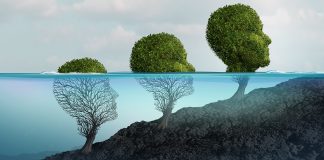
The problems that arise in our lives are nothing more than cognitive obstacles that we don't immediately have the skills to overcome. The most important question when we get stuck is: do I ask for help or do I solve my problems myself?

When online chats turn dangerous
Sexual extortion or “sextortion” is a form of blackmail where someone threatens to share an intimate image or video of you unless you meet their demands. Often, they’ll intimidate you by threatening to send the compromising content to everybody on your contact list unless you send money or more explicit images or videos of yourself.
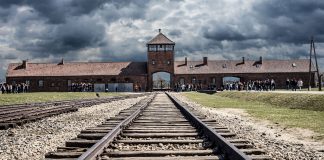
The Holocaust and the maths of an absurd history
This year, Yom Hashoah,[1] or Holocaust Remembrance Day, begins on the evening of April 27th, and ends on April 28th, at sunset. In Israel, entertainment venues are closed from sunset to sunset, sirens sound long, and the six traditional torches are lit, a symbol of the nearly 6 million people who perished in the atrocities of World War II.

A game of life
“Circumstances do not matter when you have a dream.” This seems to be the central message of the stories of those who have succeeded despite unimaginable obstacles. But can dreams still be born in the midst of the struggle for survival, in depravity, and misery? And even if they are born, do they have a chance of survival?

Fatherhood through a toddler’s eyes
I used to think I was a patient person. Then I became a dad.