














No one is perfect: how to help children learn from mistakes
To err is human. “The only sure way to avoid making mistakes is to have no ideas”, Albert Einstein said.

COVID-19 and our low-risk but endangered children
All COVID-19 statistics lead to the same conclusion: the young ones, our children, are at the lowest risk of getting ill or dying from the virus. That’s comforting. But the pandemic does pose a certain danger to them.

Why compliments make our day better
When we think about the many tasks of a new day, each morning can be a challenge to mobilise our resources—a combined test of speed and endurance, or a race against the clock with not only known obstacles but also surprising challenges that sometimes overwhelm us.

The slalom between regrets and wrong estimates
In October 2012, Forbes magazine published a list of the top 25 biggest regrets people have. According to the magazine, the most significant regrets are those concerning relationships with family members and friends, regrets concerning oneself, and career regrets.

The problem of happiness
Would you rather “achieve great things or be happy?” That question was asked in a YouGov survey (United States): 81 per cent said they would rather be happy; 13 per cent wanted to achieve great things; 6 per cent were uncertain.

Choosing happy
Paul was imprisoned by the Roman Emperor. He was on Death Row. Every morning, when he opened his eyes, he didn’t know if this day would be his last, and whether he would be thrown to the lions or burned.

The dictatorship of tolerance
"Borg creatures. A highly advanced race of predators. They have no conscience. No ethic. Chances are, it has already infected your community, your schools, your church—even your children. This real-life threat is called 'the new tolerance', a simple phrase that describes a complex modern doctrine" (Josh McDowell).

Raising contented children
Kayley lies on the floor, throwing a tantrum because she only has pink flashing-heel shoes and she wants a blue pair to match her new jeans. John sits on the floor, happily playing with a few blocks of wood. His dad found them lying in the street, brought them home and sanded them smooth. Yesterday he stacked them up to build a castle....

3 features of self-loathing people that can transform them
In sync with our modern culture, many people obsess about self-esteem, not really knowing what it means. Giving up self-loathing seems to them an impossible task. And indeed, how does one reach self-respect? Instead of a straightforward answer, here are some insightful questions to prove that you are worthy and that you can trust yourself.

Scars that heal
He had made the mistake of asking the doctors for a mirror. Terrified, he saw a monster reflected in it. Lying on the hospital bed, after the doctor left, he pulled on the tube he thought was keeping him alive. He had no reason to live.

Parenting at 110 decibels
It is said that it takes a village to raise a child. It's folk wisdom acknowledging that the development of a person requires the contribution of the whole community. What value does the community add, especially when the community in question is the scientific one?

Methods to motivate a child to draw closer to the Bible
Regular reading of the Bible in childhood is a strong predictor of spiritual health in adulthood. If instilling a love for the Bible is a crucial factor in religious education, parents need to develop methods to reinforce a habit that keeps children on the desired spiritual trajectory.

How to be a better partner
We often forget that a relationship is the sum of two people—he + she = they—and what one does inevitably affects the other. That means each person’s behaviour influences the entire dynamic. Yet, more often than not, we focus on what the other person should or could do for us or for the relationship, and rarely stop to ask: What can I do...
Sometimes God is hungry
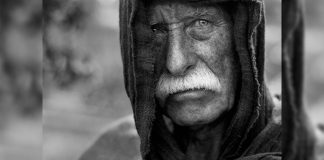
There are people who love animals; we see them often, offering scraps of food to stray dogs or pigeons in public squares and parks, gazing at them affectionately, touching them, speaking to them tenderly. Rarely, however, does any of that reserve of sympathy find its way into the silence, indifference, or reproach with which people respond to a request for help from someone...
Plight of a refugee
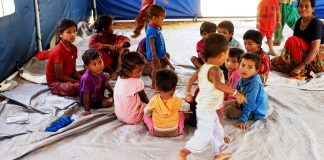
He was only seven when the war started. He used to spend his time “running around and playing with my mates,” and then one day, the houses in his town started burning down and neighbours would go missing. His parents told him to stay indoors.