













Do you know your child’s love language?
In 1997, Dr Gary Chapman released the book "The 5 Love Languages of Children" as a follow-up to his bestseller, "The Five Love Languages."
The war in Ukraine as a struggle between interpretations
It has been said before that the wars of the 21st century are hybrid wars, in the sense that, in addition to the environments in which the hostilities have taken place until now–land, water and air–a fourth environment has appeared: the virtual one.

Reacting to the worst news
In a conversation with Dr. Shelly-Ann Bowen, we discussed her research on what determines whether someone will be active or passive in the face of catastrophic events—fires, floods, or a cancer diagnosis. Social injustice, a lack of self-awareness, and even an immature understanding of faith paralyse action. But there are ways to make positive changes.

“A Time to Forgive” | Book Review
"A Time to Forgive" is the story of a pilgrimage through the void of pain and trauma. A father, devastated by the enormity of his loss, struggles to forgive his daughter's killer.

The echo chamber: how our social feed narrows our perspective on the world
We log onto Facebook without any particular goal in mind. Perhaps we want to see what our friends are doing, or maybe we just want to pass the time or feel connected for a few minutes. Our feed appears as a natural succession of fragments: a family photo, an ironic comment, or an article shared by someone we know. Nothing seems forced. Nothing...
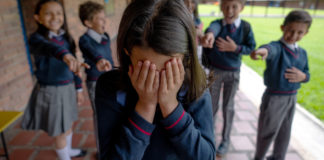
Bullying: Effective strategies to put an end to it
Children who fall prey to bullying cannot save themselves, just as the children who have become accustomed to bullying others will not give up this behaviour without outside intervention. As the phenomenon of bullying spreads, with harmful consequences on children's development, the need to know and apply strategies to combat it is becoming more pressing.

Ship your grain across the sea…you may receive a return
When we help someone without expecting anything in return, we often forget both the recipient and the gift. But God does not forget, and fulfils—at just the right time—the promise found in the verse that provides the title of this article. He did the same in my case.

Snail racing: The strange social dynamics dictated by social networks
Social interactions and the tools that facilitate them are changing the world in ways that even now, after all this time, we cannot anticipate.

Myths about introverts
Introverts are said to be shy, quiet, withdrawn people who like to spend time alone, or who don't like people. Most of this information is incorrect.

The need for clarity
More than ten years ago, I received a book for my birthday. The message inside the gift said: The Bible is the Lord's love letter to humankind. I give you this book with the hope that the reply mankind gave to God will also nourish your soul. Happy birthday! And, indeed, so it was.

An impossible inventory of the most widespread fake news about COVID-19
The epidemic of false information in this worldwide pandemic is even more infectious than the virus itself. Fortunately, there is a vaccine for this epidemic of fake news: quality information and information filters. However, not everyone has been vaccinated. Here is an immunization effort.

Family crisis does not wear a mask during a pandemic
Many families who feared that the new coronavirus would affect their health ended up dreading its effect on something seemingly even more difficult to protect: the well-being of their relationship.

Lessons from a mum’s group
FTM here. My LO has been EBF since birth. Now she’s eight months. My MIL thinks she should be on purees, but I want to try BLW.”

Be sad, better
I consider myself a fairly honest person. But when someone asks that innocent question, “How are you?” I’m often tempted to twist the truth.

Dislike for the likes that manipulate us
Paris, November 13, 2015. A European capital is struck cruelly by fundamentalists who justify their crimes in the name of something sacred—an event that shocked the entire world. It was neither the first nor, unfortunately, the last tragedy whose impact on the public has become a subject of analysis.