














Lou, the woman with no regrets left
Any sacrifice is hard to understand from the outside. But it's even harder to understand how sacrifice can be a choice that brings joy to the person making it. The easiest people to include in this category are, of course, mothers. For them, the sacrifices never seem too many or too hard. Even more amazing are those mothers who raise other people's unwanted...

What the “miracle of the resurrection” means to Christians
"We cry out to the dry bones, 'Come alive! Come to life!' / We cry out to the dead hearts: 'Rise up! Come to life! Let us see an army rise from the ashes'". The song from which I extracted these verses is so rich in literary devices that, probably, if we randomly chose a person and had them listen to it, they...

Depression, a disease of civilisation
Five decades ago, when the World Organization for Social Psychiatry was established, many thought it was a joke. Others, being more analytical, tried to prove that mental illness can only be an individual experience; that the problem always exists only in an individual and never in a group.

During the commercial breaks, happiness walks barefoot
"Once upon a time there was a man who lived in Scarcity. After many adventures and a long journey through Economic Science, he met the Affluent Society. They married and had lots of needs." (Jean Baudrillard)

Running against our own potential
If we were to liken life to the Olympics, then we would easily understand two fundamental things: you can’t score first in all the tests and, even in the areas where you are very capable, you can win by doing less than your best if those you compete against are not much of a challenge.

Forgiveness heals the one who forgives
Everyone thinks forgiveness is a lovely idea until he has something to forgive. – C.S. Lewis

Atheism at war
As the rising sun brought life and light to the east coast of North America, it was greeted by a brisk autumn morning. Hurricane Erin was on the move in the Atlantic, creating heavy rainfall from Newfoundland to Bermuda. A cold front saved most of the eastern seaboard from the hurricane’s destruction and the resulting high-pressure front produced clear skies—perfect conditions for air travel.

Seventh-day Adventists | Adventism
Seventh-day Adventists have the deep conviction that Jesus Christ will soon return, and the desire to keep His commandments as they were originally written in the Decalogue.
Prayer and the presence behind the silence
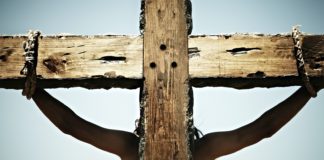
The words God is not listening! He is not answering! are the essence of one of our most troubling complaints. Is there an answer to it powerful enough to pull us from doubt’s darkness?

Practising faith
When I was at high school, I played basketball a lot—most days at school, then team training sessions and often two or three games each week. At university, I played on the best team I have been part of. We trained and competed regularly over two years, and twice won our league championship.

The perfect Christmas present
Doing things the way you've always done them is the most convenient choice. I realized this on the eve of my birthday, when it became clear to me that snowballing into the same pattern of celebrations begins to gradually, but surely, lose its flavour.

The mirror is part of us | Friendship and our self-image
A friend carries within him our identity’s safe box.

The inexhaustible Jesus
I am captivated and deeply impressed by Jesus's perspective on life and the world. He did not seek popularity, did not pursue power, and did not promote revolution. He did not rely on strategies and did not do politics. He did not come to criticize, He did not build His authority on the backs of other people's weaknesses, and He did not come...

The wisdom that comes from above
“If anyone, then, knows the good they ought to do and doesn’t do it, it is sin for them” (James 4:17). Yet Jesus asks, “Do you want to get well?” This question highlights that good cannot be done just any way or against a person’s will. Jesus shows that human will must be respected before God’s power can address sickness.

Sugar and venom: pitfalls of the freedom to buy and sell sex
More than 19 years ago, the Netherlands experimented with legalising prostitution, an approach that many countries looked at with interest and curiosity. After all, after the failure of the "noble experiment" of American prohibition, people wanted to see the result of the opposite approach with regards to sex.