









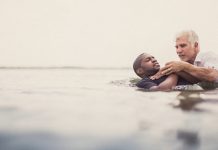




The dilemma of parents raising their children under pressure
Lucy is an 8-year-old girl who has a range of interests broader than that of an ordinary adult. She is enrolled in an international school, where classes are taught in French by native speakers. Her classmates are children of expats from different cultures, which amuses her nanny, who, when picking her up from school, says that she "took her from the children's UN."

One habit healthier. What we need to know about change
Let him that would move the world first move himself. – Socrates

The problem of happiness
Would you rather “achieve great things or be happy?” That question was asked in a YouGov survey (United States): 81 per cent said they would rather be happy; 13 per cent wanted to achieve great things; 6 per cent were uncertain.

13 things to avoid to have a strong mind
Psychologists recommend all sort of things you should have to develop a healthy and strong mind, like tenacity, ambition or optimism. To achieve this objective, however, there are also some things you should avoid.

The end of a matter is better than its beginning
Most of us have been urged since we were little to not give up, to carry on, and to “go our own way”. The idea that giving up is a negative choice, a synonym for failure, or a sign of cowardice or inability, is deeply embedded in our minds.

Friendship, through the eyes of a grandparent
In the search for deeper meanings of interpersonal relationships, we have discovered the life stories of simple, dignified people, willing to share from the abundance of their joy. Thus, these are the seasons of friendship, through the eyes of special grandparents.

No tomorrow morning: the unexpected consequences of a disturbing law
In front of the camera, the woman smiles calmly. The dimple on her right cheek, among the wrinkles, shows that Annie has repeated this smile many times in her 81 years of life. Today, however, only her lips are smiling. A strange tension weighs on her eyebrows. Today is the day Annie has decided to die.

Gambling’s dark underbelly
Problem gambling in Australia and New Zealand is an issue seldom talked about, but we ignore it at our peril.

The letter that did not get lost
Denisa Selagea has lost many things so far, from keys and phones to patience and opportunities. She has also lost sight of many words that needed to be said. So, this time, she thought she would stitch them onto paper before they got lost, to be read before it’s too late.

Hungry for youth and immortality
Crouched in the trenches of the horror of old age, modern individuals no longer wish to recover anything from the natural ageing process that their ancestors practised with such serenity. On the contrary, the first signs of physical decline become the raw material for a wide range of efforts (from picturesque to sickly) to forge a youth that the mirror refuses to restore.

How much are we worth as humans?
Every day is an opportunity to ask ourselves how it is that human life has such little value in the eyes of some of our contemporaries—those contemporaries living in freedom and democracy (on paper, at least), who are educated and socialised within the same civilization as we are, often even in the same community, or under similar civil laws and generally having the...

People who face tragedies with eyes wide open
When faced with great tragedies, the most overwhelming feeling is one of helplessness. What can we do to change the lives of the hurting for the better? How can we help when not even the strong can find solutions? The answer is not simple, but it is more accessible than we might believe if it includes empathy, courage, and the faith that any...

A few things that help life make sense
I spoke very little in my early years and my mother says that my silence scared her. She never knew what was going through my mind. She was afraid I was hiding something.

Appeal to ignorance: Why it is useless to hide behind your finger
The appeal to ignorance (argumentum ad ignorantiam) is an error in thinking which argues that a conclusion is true because there is no evidence against it, or that a conclusion is false because there is no evidence in its favour.

Introverts and their road to success
They would rather work alone or in small teams, they do not wish to draw attention, they love quiet, less stimulating environments, and they need time to make decisions. With this general profile, introverts seem to have a slim chance of prospering in a society that usually rewards extroverts—unless they learn to harness their strengths.