













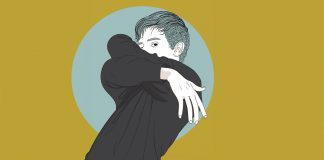
Adolescence: a generational Tower of Babel
Adolescence is not a series to watch with your teenage child, but it is a series that may cause mature viewers to re-evaluate their relationship with their own children, as well as their relationship with their parents.

Amid people and books
Meetings with people and books have shaped the space for a sometimes unequal, sometimes unsatisfactory growth between the human I am and the one I would like to be.

How well do you know your heroes?
In 2016, I noticed advertising for a new quiz show called Hard Quiz coming to ABC TV in Australia.

The neighbour and the farthest
Could it be that, beyond economic, political or geostrategic difficulties, there are obstacles to the ideal of the common good that are inherent in human nature? And if something specific to human nature stood in the way of achieving this ideal, would it not lead to failure, regardless of overcoming all other difficulties?

The social media trap
Two recent stories in Australian media shocked me to my core. Two 12-year-olds in different states took their own lives after being bullied at school.

Too many or too greedy? An answer to global overpopulation
"The battle to feed all of humanity is over. In the 1970s and 1980s hundreds of millions of people will starve to death... It cannot be overemphasised, however, that no changes in behavior or technology can save us unless we can achieve control over the size of the human population." Despite seeming to come from a dystopian novel, these ideas belong to biologist...

The quest for perfection among today’s parents
Anyone who thinks they know exactly how to raise a child will usually change their perspective after becoming a parent. Beyond the joy of welcoming a new family member, they are confronted with the "despair and helplessness" of navigating the complex and unfamiliar world in which they now find themselves, writes psychotherapist Isabelle Filliozat.


Running against our own potential
If we were to liken life to the Olympics, then we would easily understand two fundamental things: you can’t score first in all the tests and, even in the areas where you are very capable, you can win by doing less than your best if those you compete against are not much of a challenge.

At the crossroad of our thoughts
Our daily habits and actions constitute our state of mind. However, few people know that we hold great power over our own thoughts. Developing this power could pave the way for happiness.

Working from home: how do we find a work-life balance?
When it comes to working remotely, many benefits come to mind. In practice, however, working from home can be so all-consuming that we don't know where work ends and personal life begins, and we need strategies to balance the relationship between the two.

The constraints that make us happy
American psychologist Barry Schwartz's counterintuitive study argues uncomfortably similarly to communist philosophy, while offering a stunning argument for Christianity, the enemy of communism.

More than just one thing
If you were asked to describe who you are, what would you highlight first?

Can’t get no motivation?
If you can’t get motivated, you aren’t alone. The people at Therapy Central recognise that many of us struggle with feelings of “nothing gets me going”, “I don’t care about anything” or “I just don’t care about getting out of bed”. In these situations, keeping motivated can be a chore.

Where should we go for help?
There were once two friends. One day, one of them went to the other, with a heavy heart, less than desirable thoughts in his head, and a bevy of bad behaviours. He really wanted to change them. He wanted to get better.