




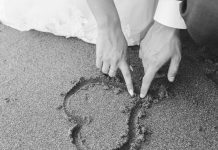









For better or for worse | How to love for a lifetime
"Marriage: a book of which the first chapter is written in poetry and the remaining chapters written in prose." (Beverley Nichols)

Generosity: the liberating face of love
It happens to all of us: we feel the warmth of a song or the peace of prayer and have the sense that God’s love is there, alive and near. But true love does not stop at emotion. It asks to be expressed in concrete ways, shaping the choices and actions of everyday life.

“If the paper screen is closed, it means I’ve died”
When a closed window shade becomes an SOS sent by those used to living on their own but afraid of dying alone, something has fundamentally changed in a society that not long ago valued human relationships.

When all direction is gone | How to survive adultery
Henri Nouwen once wrote about some trapeze artists who became his friends, emphasising the perfect synchronicity between them and the total trust that the one who jumps has when he lets go of the trapeze and remains in the air for a second, waiting to be caught by his teammate. But what if, at the last moment, when it is too late to...
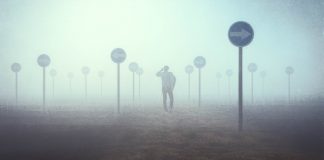
The quagmire of insecurity
Of all the evidence that younger generations are living in the shadow of insecurity, depression is the most compelling. Anxiety, which accompanies the daily lives of a record number of young people, paints a picture of a generation that experiences an almost constant lack of control.

Lost my gratitude, won’t write it off
The final struggle of life before it slips away, through an intermezzo of agony, from the one whose body it energised, seems to carry no hint of a miracle. It's an image you'd want to turn away from until the grotesque faces of the crushing moment fade. It's a passing—rarely gentle—into the rest that follows life's final flutter of wings.

The Christian citizen
“If it is possible, as far as it depends on you, live at peace with everyone” (Romans 12:18).

The great failure of too high expectations
From the first positive pregnancy test, parents often build up expectations for their baby. And as the little one grows, so do the expectations—emotional, cognitive, moral and academic. While it's only natural that this should be the case, as children need to be set standards, parents' expectations can often turn out to be a double-edged sword.

Rewiring the cynical mind
Cynicism might feel smarter and more realistic—but the evidence simply doesn’t back it.

Scars that heal
He had made the mistake of asking the doctors for a mirror. Terrified, he saw a monster reflected in it. Lying on the hospital bed, after the doctor left, he pulled on the tube he thought was keeping him alive. He had no reason to live.

The need to learn to say no
Although we may not like everyone, we want everyone to like and accept us. We raise our eyebrows suspiciously if someone treats us with indifference or, worse, with hostility. We feel misunderstood and rejected. And the feeling of rejection is as intense as physical pain.

Single (and happy)—an increasingly common status in modern society
The number of single individuals has skyrocketed in the past few decades in nearly 40% of the world’s countries. While some complain about the economic discrimination they face, many who have chosen this lifestyle believe they hold a winning ticket in other areas of their lives.

From science to magic: the unpredictable journey of positive thinking
Over the years, the concept of positive thinking has proved to be extremely versatile and has managed to lure millions of people into the grip of powerful promises, convincing them that life can offer more than what they have been able to experience so far.

Until love do us part
We see it in movies, read it in modern children’s stories, and hear it in romantic songs: love is the most beautiful, most desirable, and most precious asset of humanity. Many argue that if there is anything that can save the world from itself, it is love. But how is it that love itself has led to profound systemic issues, by dissolving the...

Self-esteem and religion, a complicated relationship
Some psychologists fear that religion erodes self-esteem. Some believers fear that self-esteem endangers salvation. Who is right?